
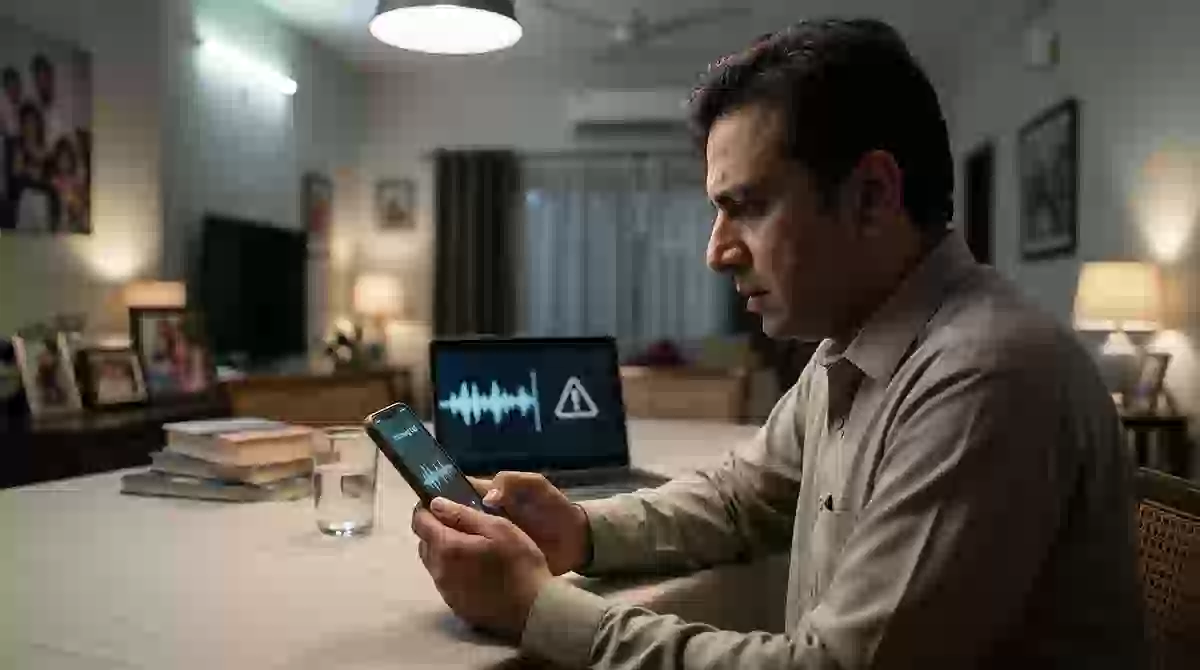
Imagine receiving a phone call from your son. He sounds frightened and tells you he has been in an accident. He needs money immediately, but asks you not to tell anyone.
You recognise his voice. You know how he speaks. You become worried and start thinking about how to help.
But what if the person on the phone is not your son?
AI voice cloning can copy someone’s voice and make it sound like they are speaking words they never actually said. Scammers are using this technology to create fake emergencies and trick families into sending money.
Pakistan’s National Cyber Crime Investigation Agency (NCCIA) also highlights AI voice-clone scams on its official website.
Here is how these scams work and, more importantly, how you can protect your family.
What Is an AI Voice Cloning Scam?
AI voice cloning uses artificial intelligence to create a digital copy of someone’s voice.
A scammer may obtain voice recordings from public videos, social media posts or other available audio. They can then use voice-cloning software to generate speech that sounds like the original person.
For example, someone could take a recording of your brother speaking in a YouTube video and use AI to generate a new message in a similar voice.
The scammer might then call your family and pretend to be your brother.
The technology itself has legitimate uses, including entertainment and accessibility. The danger comes when criminals use it to impersonate people without permission.
How Do These Scams Work?
Most family emergency scams follow a similar pattern.
- Collecting a voice sample: The scammer finds a recording of the person they want to impersonate.
- Creating a voice clone: They use AI software to generate speech that resembles the person’s voice.
- Making an emergency call: They pretend to be a son, daughter, brother or another relative.
- Creating panic: They claim there has been an accident, arrest, hospital emergency or another serious problem.
- Demanding money: They ask for an immediate bank transfer or payment through a mobile wallet.
In Pakistan, a fraudulent caller might request money through Easypaisa, JazzCash or a bank account.
The caller may also insist that you keep the situation secret. This is a common pressure tactic designed to stop you from checking the story with other family members.
How to Verify If a Family Member’s Voice Is Real
The most important thing to understand is that you cannot reliably identify every cloned voice just by listening. A convincing recording may sound completely natural.
Instead of trying to detect AI, use these checks.
1. Hang Up and Call Their Saved Number
This is the most important step.
If someone calls claiming to be your son or daughter and asks for urgent money, end the call.
Open your phone contacts and call their usual number yourself. Do not call a different number provided by the caller.
If they do not answer, contact another trusted family member who can confirm their whereabouts.
2. Create a Secret Family Code Word
Agree on a private word or phrase with close family members.
For example, your family might choose a word that has no obvious connection to your names, birthdays or public information.
If someone calls claiming to be in trouble, ask for the agreed code word.
Keep it private. Do not post it on social media or share it publicly.
Remember that a code word is an additional precaution, not a replacement for calling the person back.
3. Ask a Question Only Your Family Member Knows
You can ask about a private shared memory or an event that is not available publicly.
For example:
- What did we do during our last family trip?
- What nickname did your grandfather use for you?
- What was the name of the restaurant we visited together?
Do not reveal the answer or give clues. A scammer may already know basic personal information from social media.
4. Verify the Emergency Separately
Even if the caller sounds convincing, verify the actual emergency.
Contact another relative, the hospital or the relevant person through a trusted contact method.
Do not rely on a phone number, payment account or contact details supplied by the suspicious caller.
5. Never Send Money Under Pressure
Scammers want you to act before you have time to think.
Do not transfer money simply because someone sounds frightened or claims there is an emergency.
Take a few minutes to verify the situation. A genuine family emergency can still be checked through another trusted person.
Warning Signs of an AI Voice Scam
Be particularly careful when several of these signs appear together:
- A family member suddenly calls from an unfamiliar number.
- They claim to have been arrested or involved in an accident.
- They demand money immediately.
- They refuse to let you speak to anyone else.
- They ask you to keep the situation secret.
- They request payment to an unfamiliar bank or mobile wallet account.
- They become angry when you suggest calling them back.
None of these signs alone proves that a voice is AI-generated. However, an urgent and unusual request for money should always be verified.
What If You Have Already Sent Money?
If you believe you have been tricked by a cloned voice, act quickly.
First, contact your bank or mobile wallet provider through its official helpline and report the transaction. Ask whether it can be stopped or investigated.
Save the caller’s number, messages, payment receipts, transaction IDs and screenshots. Do not delete the conversation.
In Pakistan, you can report cybercrime to the National Cyber Crime Investigation Agency (NCCIA).
- Helpline: 1799
- Online complaint: NCCIA Official Website
- Complaint portal: complaint.nccia.gov.pk
If there is an immediate physical threat, contact the police rather than relying on an online complaint.
Frequently Asked Questions
Can AI clone someone’s voice from a short recording?
Yes. Some voice-cloning systems can create convincing results from relatively short audio samples. The amount and quality of audio required depend on the technology.
Can I identify a fake voice by listening carefully?
Not reliably. Some cloned voices may contain unusual pauses or pronunciation, but others can sound natural. Always verify the person’s identity through another channel.
Should I delete my family videos from social media?
You do not necessarily need to delete everything. However, review your privacy settings and avoid sharing unnecessary personal audio recordings publicly.
Is this scam happening in Pakistan?
Pakistan’s NCCIA officially identifies AI voice-clone scams as a cyber-safety threat and warns about fake calls involving relatives in emergencies.
Conclusion
AI voice cloning has made phone-based impersonation more convincing. A familiar voice is no longer enough to prove someone’s identity.
The best protection is a simple family rule: never send money because of an unexpected emergency call without independently verifying the person and the situation.
Create a private family code word, keep trusted phone numbers saved and teach older family members about these scams. A few minutes of verification could save your family from losing a significant amount of money.